




Project: Highly Skilled Migration to the Gulf States
Highly Skilled Migration to the Gulf States: How do GCC Countries Fare in the Global Competition for Talent?
The six GCC countries are the first migration hub in the global South, and the third destination for migrants worldwide after North America and the EU. Over the last decade, all countries in the region started conducting very ambitious socio-economic reform projects to transition from oil-based, rentier economies to diversified, knowledge-based development.
Therefore, Gulf states are now competing globally to attract and retain the best talents from everywhere in the world. The project explores the various dimensions of Gulf states’ attractivity to highly skilled migrants and assesses the place of Gulf states in the global competition for talents vis-à-vis other migrants-receiving regions.
The project has three phases.
The project has been implemented in cooperation with and financial support from the Regional Programme Gulf States (RPG) Konrad Adenauer Foundation (KAS) – https://www.kas.de/en/web/rpg.
Phase one
In phase one of the project (completed in 2024), contributions analysed and assessed migration-related policies in three receiving Gulf states (Saudi Arabia, the UAE and Qatar) since 2010, based on desk research and first-hand information retrieved from interviews with migration policy makers and other stakeholders, as well as with highly skilled migrants in GCC countries.
In order to challenge the common assumption that migration to the region is essentially driven by Gulf states’ labour demand to implement oil-funded investment initiatives, phase one of the project also focused on the drivers of emigration from five origin countries (Tunisia, Egypt, Pakistan, India and the Philippines).
Gulf states
Do they succeed in attracting and retaining highly skilled workers? Economic reform context, labour and migration policies put in place; and challenges faced.
Contributors were asked to focus on:
- Characteristics of highly skilled workers in the three countries (socio-demographic, migration and employment characteristics)
- Dynamics of attraction/retention of highly skilled migrants:
- Current and future labour needs in the framework of the technological and other changes (development of AI, knowledge-based development, decarbonization and greening of economies): new skill profiles, professions, and activity sectors on demand
- Policies towards the highly skilled workers in the three countries: policies directed at working conditions, at the overall livability especially for the workforce with family, at socioeconomic integration…)
- Outcomes of economic reforms and policies of attraction/retention of highly skilled workers on the populations of foreign workers and residents; on interactions between Gulf citizens and foreign residents; on receiving countries’ socio-economic context; on migration and geopolitics (shift in countries of origin of migrants, competition between Gulf states to attract highly skilled, …).
Countries of origin
New drivers and outcomes of emigration to the Gulf states from origin countries. Patterns of Gulf states’ attractivity to highly skilled prospective migrants, migration stakeholders’ perceptions and policies towards highly skilled emigration to the Gulf.
Contributors were asked to focus on:
- Current and future dynamics of emigration (outflows) from the five countries sending migrants to the three Gulf states
- Numbers, socio-demographic and professional profiles of actual migrants
- Specific dynamics (regional, professional, …)
- Migration processes (networks, use of placement agencies, etc.)
- Highly skilled perceptions of Gulf states and migration intentions
- Policies and stakeholders’ perceptions regarding highly skilled emigration; and regarding migration of citizens to Gulf states
- Socio-political and socio-economic background of emigration of the highly skilled to the Gulf (from individual to structural drivers)
- Outcomes of emigration to the Gulf in terms of development of the origin country (financial and other remittances, investments, …).
Publications
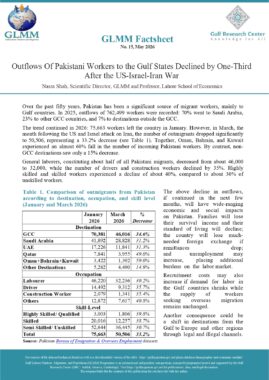
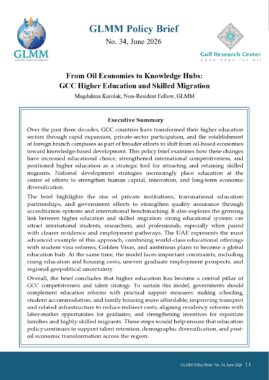
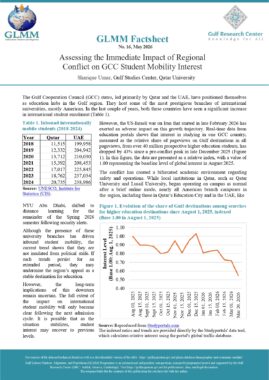
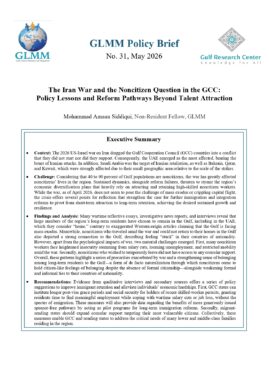
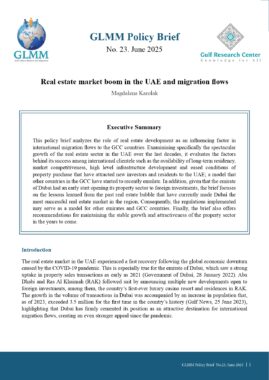
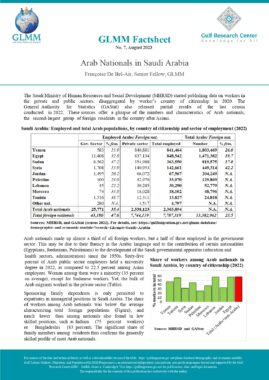
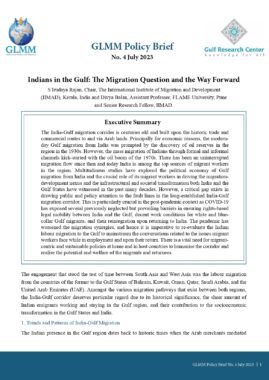
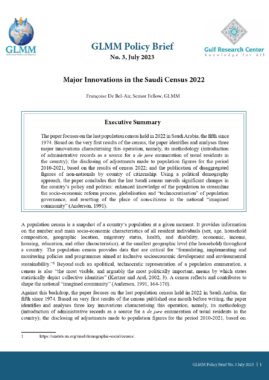
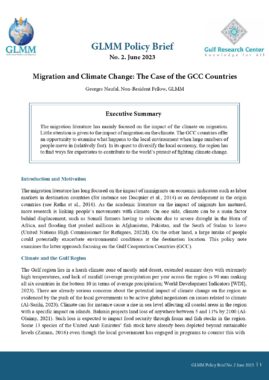
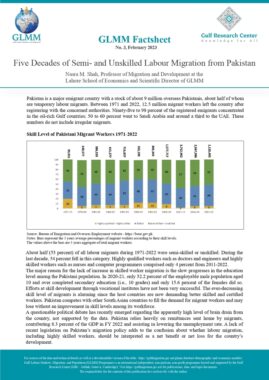
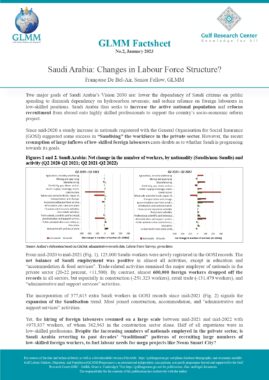
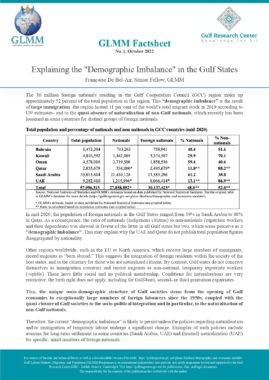
Eight policy briefs have been published from the first phase of the project and are available here:
Eight Research Reports on which these Policy Reports are based will be published in April/May 2026 in an edited volume which will be made available here and on the GLMM Publications webpage.
Workshop, Riyadh, 1-2 December 2024
All eight studies were presented and discussed in a workshop. Workshop summary: https://gulfmigration.grc.net/wp-content/uploads/2025/01/GLMM-Workshop-Future-of-Saudi-and-Gulf-Migration-Riyadh-1-2-December-2024-Summary-2024-12-12-1.pdf.
Webinar, 22 January 2025
Highly Skilled Migration to Saudi Arabia: Labour Policy Reforms and the Global Competition for Talents. Webinar summary: https://gulfmigration.grc.net/wp-content/uploads/2025/02/GLMM-Webinar-No.6-Highly-Skilled-Migration-Saudi-Arabia-22-January-2025-Summary-Final-2025-02-03.pdf.
Workshop, Cambridge – GRM, 22-24 July 2025
In the framework of the 15th Gulf research Meeting (GRM) which will be held in Cambridge UK from 22 till 24 July 2025 – https://gulfresearchmeeting.net – GLMM organized a workshop entitled “Highly Skilled Migrants and the GCC countries Drivers, Perceptions, Policies, and New Dynamics”: https://www.gulfresearchmeeting.net/documents/6739b50a9af26GRM2025WorkshopDescription.pdf.
Phase two
Highly skilled workers’ onward migration from the Gulf to the EU and North America: Trends and patterns of the global competition for talents
The second phase of the project focuses on transnational migration patterns of non-Gulf highly skilled workers from the GCC to third countries in the EU and North America, and back. The project will also explore the trends and characteristics of migration from selected European countries to Gulf states (Germany, France, and the UK). Taking stock of the multiple types (repeated, secondary, serial, onward, stepwise, etc.) and trajectories (linear, circular, lateral, hierarchical, etc.) characterizing such migration, the project will seek to estimate the scale of the phenomenon, analyze the processes, characteristics, and drivers of these movements, seek to pinpoint whether patterns exist in these movements and their possible differentials according to specific variables, as well as highlight their outcomes on Gulf states and selected destination or transit countries in the EU and North America.
Tackling this issue will increase information available to academics, as well as policymakers in the countries concerned, on a still under-researched phenomenon. Moreover, the project will usefully assess whether recent shifts in migration policies actually fulfill their aim of attracting, as well as retaining, highly skilled migrants in Gulf states. The project may also assess the outcomes of recent changes in the political contexts of the Global North, as well as that of migrants’ countries of origin, on onward migration intentions, destination choices, return, or stay in Gulf states. Finally, the projects’ results will add insights into the Gulf states’ position in the global competition for talent between the three major immigration hubs worldwide (GCC, EU, and North America).
Workshop, Riyadh, 2 December 2025
All 13 studies of the projects second phase were presented and discussed in a workshop. Workshop summary: Forthcoming
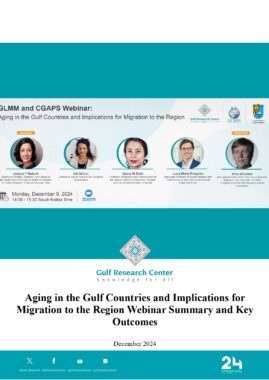
Webinar, 9 December 2025
Stepwise migration to the Gulf states and onwards: Highly skilled workers in the global competition for talents. Webinar summary: Forthcoming
Webinar, 20 January 2026
From Transit to Settlement? Mapping Secondary Mobility from Gulf States to Europe and North America and Its Policy Implications. Webinar summary: Forthcoming
Publications (forthcoming April-May 2026)
Will be made available here and on the GLMM Publications webpage.
Policy Report No. 1. Mouawiya AlAwad and Froilan Malit Jr: Beyond the Gulf: Rethinking Stepwise Migration, Citizenship Penalty, and Filipino Nurses in the UAE
Policy Report No. 2. Gennaro Errichiello: Second Generation Highly Skilled Pakistanis in Dubai Drivers of Secondary Migration
Policy Report No. 3. Sharique Umar: Migration Policy Reforms and Mobility Decision-Making High-Skilled Second-Generation Residents in Qatar, the UAE, and Saudi Arabia
Policy Report No. 4. Areej Jamal, Nasra M. Shah, Richa Shivakoti: Strategic Pathways for Highly Skilled South Asian Migrants in Saudi Arabia’s Knowledge Economy
Policy Report No. 5. Anurag Devkota: Regulating Stepwise Migration in the Nepal-Gulf-Europe Migration Corridor Challenges and Recommendations
Policy Report No. 6. Anushka Bose: Hierarchies of Citizenship and Wage Differentials in the Gulf: A Driver for Onward Migration to North America and the EU
Policy Report No. 7. Ayat Nashwan and Sadia Khan: The Impact of Long-Term Residency Policies on the Migration and Retention of Healthcare Professionals: A Case Study of the UAE’s Golden Visa Program in the Gulf Context
Policy Report No. 8. Froilan Malit Jr.: Outmigration of Highly Skilled Workers as a National Security Issue? Analyzing Gulf States’ Perception and Coping Strategies
Legal Report. Asma Atique: Comparative Legal Frameworks for Highly Skilled Migration: A post-COVID Analysis of Canada, France, Germany, the United Kingdom, and the United States
Statistical Report. Françoise De Bel-Air: Highly Skilled Immigration Pathways and Trends, 2015–2024 – Canada, Germany, United Kingdom, United States
Pilot Survey Report. Nasra M. Shah and Areej Jamal: Stepwise and Return Migration Between the Gulf, Europe, and North America
Synthesis Report No. 1. Mohammad Amaan Siddiqui: Challenges to the GCC’s Economic Diversification Agenda: Understanding the Structural Drivers of High-Skilled Emigration from the Gulf
Synthesis Report No. 2. Michael Ewers: The Gulf Talent Retention Paradox: Drivers, Dynamics, and the Rise of Circularity
Bibliography. Chaïmaa Benkermi: Attracting and Retaining Highly Skilled Migrants in the GCC